By David James · November 2026
A good block start won't win a race on its own, but a poor one can lose it. The setup takes only a minute once you know your numbers, and the same habits that give you a powerful start also stop you overstriding later in the race.
Step 1: Find your front leg
Most sprinters put their stronger leg on the front block, because it pushes for longer. If you're not sure, try both ways and time a few 10m starts. Go with whichever feels more powerful and is faster.
Step 2: Set the block distances
A simple way to measure is in foot lengths, heel to toe:
- Front block: about 1.5 to 2 foot lengths behind the start line.
- Rear block: about 1 to 1.5 foot lengths behind the front block.
This is a "medium" start, the best starting point for most athletes. Taller or more powerful sprinters often move the blocks a little further apart. Write down your settings once you find what works, so you can set up quickly at every meet.
Step 3: Set the pedal angles
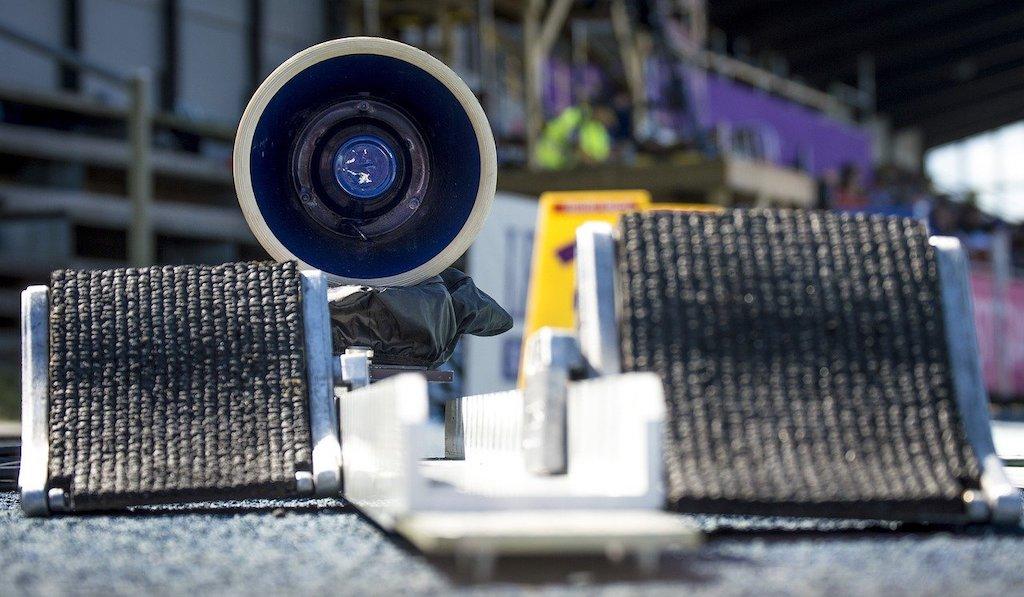
A common starting point is a flatter front pedal (around 45–50°) and a slightly steeper rear pedal. Lower angles let you push from a more stretched position, but you need strong calves to use them. Adjust in small steps.
Step 4: "On your marks"
- Back into the blocks, put your feet against the pedals with your toes just touching the track.
- Kneel on your back knee.
- Place your hands just behind the line, a little wider than shoulder width, with your thumbs and fingers forming a bridge.
- Keep your arms straight and your shoulders over or slightly in front of your hands. Relax your neck and look down.
Step 5: "Set"
- Raise your hips smoothly until they're slightly higher than your shoulders.
- Your front knee should be bent to about 90° and your back knee to roughly 120–135°.
- Press firmly into both pedals and hold still. Any movement after "set" is a false start.
Step 6: The first steps
- Push, don't step. Drive hard through both pedals and punch your arms.
- Stay low. Keep a strong forward lean and rise gradually over the first 20–30m.
- Short, powerful steps. Your first steps should land behind your hips and get longer as you speed up.
For more on the start itself, read sprint starts. If you need blocks to practise with, see our best sprinting blocks guide.
How to stop overstriding
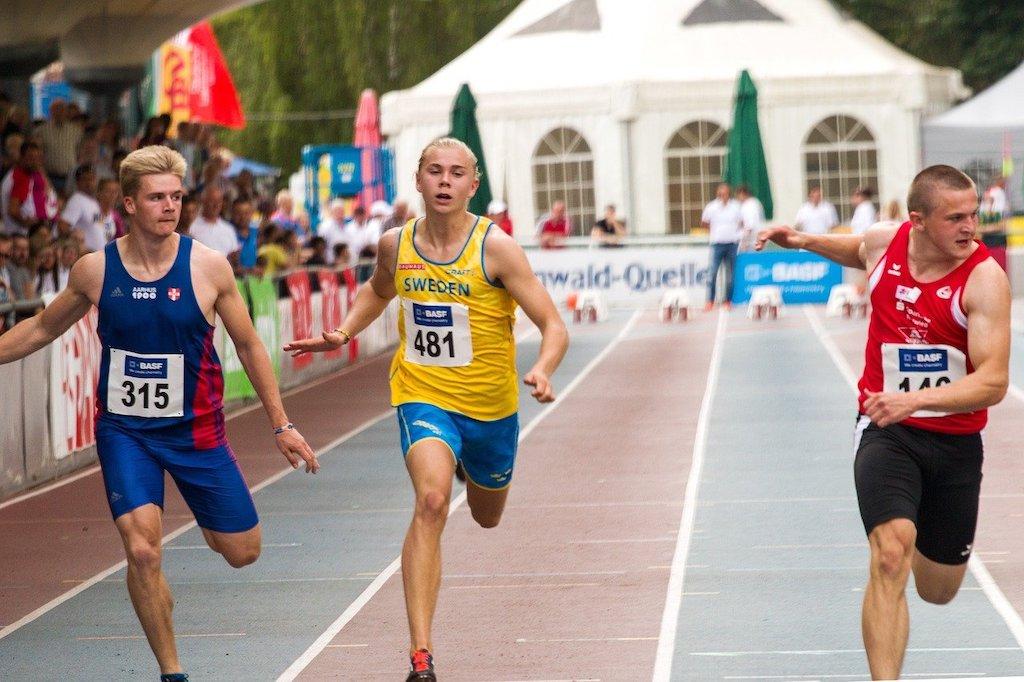
Overstriding means your foot lands too far in front of your body. Each landing then acts like a brake. It's common after the start, when athletes reach for longer steps too early, and at top speed, when they try to stride out.
Signs you're overstriding
- Your foot lands well ahead of your hips, often heel first
- You feel like you're reaching for the track
- You sit back, with your hips behind your shoulders
- Your speed fades early, even when you feel strong
Drills to fix it
- A-skips and A-runs: practise striking the ground underneath your hips.
- Wicket runs: sprint over low markers spaced evenly, which teaches rhythm and the right stride length.
- Hill sprints: the slope naturally puts your foot down under your body. See hill sprints.
- Cue "push the ground away": think about pushing behind you rather than reaching forward.
Longer strides should come from pushing harder, not reaching further. Read how to increase your stride length for more.
FAQs
How far apart should starting blocks be?
A good starting point is the front block 1.5 to 2 foot lengths behind the line and the rear block 1 to 1.5 foot lengths behind the front. Adjust from there.
Which foot goes in front in the blocks?
Usually your stronger leg. Test both and keep the one that gives you the faster first 10m.
Why do I stand up too quickly out of the blocks?
Usually because your hips start too high, or you step forward instead of pushing back. Focus on driving into the pedals and keeping your lean.
Keep reading
About the author: David James is a former high-school and semi-professional track and field athlete who competed at national level in Australia and the UK.
Newsletter
Get one useful session every week
A practical workout, a technique cue and the guides worth reading next. Free, and you can unsubscribe at any time.