Cross country is hard on spikes. You race on grass, mud, dirt and gravel, up and down hills, often in the rain. The best cross country spikes grip on soft ground, stay secure on corners and descents, and have enough cushioning for a 5–10 km race. This guide covers the best options for every level, with prices checked on VS Athletics on 24 November 2026 (USD).
The short answer: the Nike ZoomX Dragonfly XC is the best cross country spike for experienced racers, and the Nike Zoom Rival XC 6 is the best choice for beginners and anyone on a budget. The Saucony Havok XC3 sits in between: a light, grippy racer for under $90.
Quick picks
- Best overall: Nike ZoomX Dragonfly XC
- Best for beginners and value: Nike Zoom Rival XC 6
- Best mid-price racer: Saucony Havok XC3
- Most cushioned: ASICS Resurgence XC
- Best for rough courses: UA Brigade XC 2
- Clearance deal: Nike Zoom Victory XC 5
Comparison table
Prices are from VS Athletics on 24 November 2026 and change often. Sale prices apply to some colourways and sizes only.
| Spike | Best for | Level | Pins | Price (USD) |
|---|---|---|---|---|
| Nike ZoomX Dragonfly XC | Best overall | Advanced–elite | 6, removable | $160 (one colourway $79.98) |
| Nike Zoom Rival XC 6 | Beginners and value | Beginner–club | 6, removable | $65–70 (one colourway $58.50) |
| Saucony Havok XC3 | Mid-price racer | Club–advanced | 6, removable | $76.50 (was $85) |
| ASICS Resurgence XC | Most cushioned | Beginner–advanced | 5, removable | $90 (two colourways $69.95) |
| UA Brigade XC 2 | Rough courses | Beginner–advanced | 4, removable | $69.95 |
| Nike Zoom Victory XC 5 | Clearance deal | Club–advanced | 6, removable | $29.99 (was $110) |
The best cross country spikes, reviewed
1. Nike ZoomX Dragonfly XC — best overall
The cross country version of Nike's Dragonfly keeps the soft, bouncy ZoomX foam and full-length plate of the track spike, and adds a tougher upper for mud and wet grass. It comes with a second set of pyramid pins for sloppy courses. It's close to zero drop, so it suits runners used to racing on their forefoot.
- Great for: experienced high school, college and club racers.
- Watch out for: the price, and it's heavier than the track Dragonfly (about 176 g).
2. Nike Zoom Rival XC 6 — best for beginners and value
The Rival XC is the spike most first-season runners start in, and for good reason. It's comfortable, grippy and cheap, and an arch band holds your foot in place on muddy, uneven ground. Put blanks in place of the pins and it doubles as a cross country flat.
- Great for: beginners, juniors and anyone who wants one pair for training and racing.
- Watch out for: it runs small; Nike suggests going half a size up.
3. Saucony Havok XC3 — best mid-price racer
Saucony's most aggressive cross country spike is light and low to the ground, with a six-pin plate and a full-length rubber outsole that grips between the pins. Its EVA midsole gives enough protection for longer races without feeling mushy.
- Great for: competitive runners who want a fast racer without paying for a carbon plate.
- Watch out for: firmer, simpler cushioning than the Dragonfly.
Check price at VS Athletics → (women's version)
4. ASICS Resurgence XC — most cushioned
The Resurgence puts more FlyteFoam under your foot than most cross country spikes, so it stays comfortable over a full 8 or 10 km course. It has a five-pin plate and comes with a spike wrench and pins.
- Great for: runners who find racing spikes harsh, and longer college and club races.
- Watch out for: it doesn't feel as fast and snappy as the lighter racers.
5. UA Brigade XC 2 — best for rough courses
The Brigade XC 2 uses a Michelin rubber outsole with traction lugs, so it grips well on hard-packed dirt and gravel, and even with the pins taken out. It's a tough, simple spike with a four-pin plate.
- Great for: courses that mix grass with paths, gravel or roads.
- Watch out for: unisex sizing; women should order about 1.5 sizes smaller.
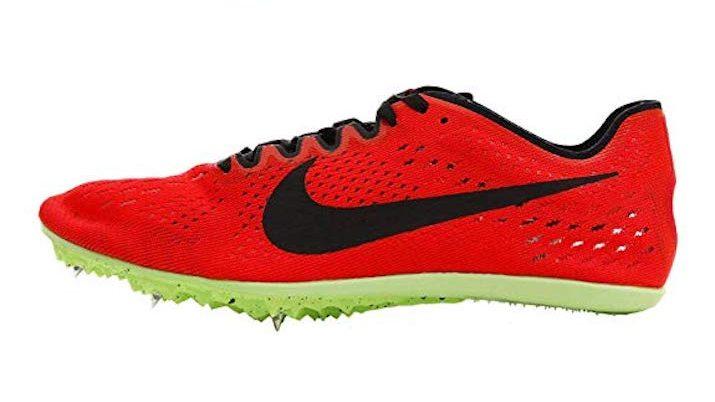
6. Nike Zoom Victory XC 5 — clearance deal
An older version of Nike's aggressive six-pin cross country racer, now heavily reduced at VS Athletics. It's a lot of spike for under $30 if your size is still available.
- Great for: a cheap backup or second pair.
- Watch out for: limited sizes, and it's a previous-generation model.
How to choose cross country spikes
Removable pins. Choose a spike with removable pins, so you can fit longer pins for mud or take them out for hard ground. Fixed-pin track spikes, such as the Nike Dragonfly 2 Elite, can't be adjusted for the course.
Pin length. Cross country uses longer pins than the track. As a rough guide, use about 9mm (3/8″) for firm grass, 13mm (1/2″) for soft or wet courses and 16mm (5/8″) for deep mud. Always check your meet's rules first. Our spike pin sizes guide explains the options.
Fit and security. Hills, tight corners and mud twist your foot. Choose a spike that locks your heel and midfoot in place, and lace it firmly.
Cushioning. Cross country races are longer than most track races. Beginners and runners in 8–10 km races usually do better with a little more foam, such as the Resurgence or Rival.
Outsole grip. Rubber lugs between the pins add grip on mixed ground, and let you race the spike as a flat on hard or rocky courses.
FAQs
Do you need spikes for cross country?
Not always, but they help on grass and mud. On dry, hard or rocky courses, many runners race in cross country flats, or in their spikes with blanks screwed in place of the pins.
Can I use track spikes for cross country?
Distance spikes with removable pins work on many courses. Avoid sprint spikes: they're too stiff and have little cushioning for a 5 km or longer race. See our best 5000m spikes guide for distance spikes that also work off the track.
How long do cross country spikes last?
If you only race in them, a good pair usually lasts at least two seasons. Train in your trainers and keep your spikes for races and the odd race-pace session on grass.
Should cross country spikes be tight?
Snug, with no heel slip, but not painful. Many runners wear spikes a little tighter than trainers. Unisex spikes use men's sizing, so women usually need about 1.5 sizes smaller.
Keep reading
- Cross country hub: training, race-day checklist and gear
- Spike pin sizes explained
- Best 5000m spikes
- How to break in new spikes
About the author: David James is a former high-school and semi-professional track and field athlete who competed at national level in Australia and the UK.
Affiliate disclosure: Fast Running Club may earn a commission when you buy through links on this page, at no extra cost to you.
Newsletter
Get one useful session every week
A practical workout, a technique cue and the guides worth reading next. Free, and you can unsubscribe at any time.